Sunflower

Sunflower

Thursday, April 18, 2013

Rotation of crops in the community garden

Hi all,
          Please have a read below on the importance of crop rotation in your community/garden/allotment.

Enjoy
Willie
Principles of Crop Rotation

•The first principle of any crop rotation is to have the largest possible gap between potatoes occupying the same piece of ground. The same applies for brassicas, the cabbage family.

•Keep lime away from potatoes because it increases the chances of them getting scab. Conversely, brassicas like a limey soil. So potatoes should be planted as far away from the application of lime as possible and brassicas can go in to soil that has been limed.

•Root crops such as carrots and parsnips do not want soil that has been manured the previous autumn. It will cause them to fork and split.

•Where possible, keep plants of the same family together as their requirements will be similar.

Crop Rotation - Plant Families or Groups

When planning your crop rotation you need to know what family the various plants belong to. Plants within the same group tend to have the same requirements and suffer from the same pests and problems. For example, club root affects brassicas, the cabbage family, but did you know swedes are brassicas? They look more like a root crop than a cabbage!  Blight is mainly thought of as a problem with potatoes, yet it affects tomatoes just as badly, once again members of the same family.
The list below should help you identify what crops need to go together in the crop rotation.

Cruciferae - the cabbage tribe, formerly known as Brassicaceae from which we get Brassica. This is one of the most important crop groups in a rotation as they are generally lime loving. Because of the requirement for a high pH level, they anchor one end of the crop rotation cycle.

 The group includes:   Cabbages, Cauliflowers, Kale, Broccolis and Calabrese, Swedes, Turnips, Radishes, Landcress, Mustard

Solanaceae - the potato family, which also includes tomatoes and aubergines. The potatoes form the anchor at the other end of a rotation as they need a fairly high level of nitrogen and prefer a slightly acid soil with a pH around 5.5. Usually manure is added to the plot the autumn before planting the potatoes.

Leguminosae - the bean family of legumes.  Anything  with 'bean' in the name, runner, French, broad, field and peas which are one of the oldest food crops grown by man. These share a wonderful ability to fix nitrogen from the air and so provide at least a good proportion of their fertiliser requirements.

Alliums - the onion family. Allium comes from the Latin for garlic and includes shallots and leeks.

Cucurbitaceae - the cucurbit family includes cucumbers, marrows, courgettes and pumpkins as well as cucumbers.

Umbelliferae - this includes carrots, parsnips, Hamburg and ordinary parsley, celery and celeriac. 

Species not listed above, like sweet corn, can be considered out of the family groups and safely intermixed with them. Salsify and scorzonera are members of the Compositae family but best considered as Umbelliferae along with the parsnips.

Leeks   Allium,   Onions   Allium,   Shallots   Allium,   Beetroot   Chenopodiaceae,   Spinach   Chenopodiaceae,   Jerusalem Artichokes   Compositae,   Lettuce   Compositae,   Salsify   Compositae,   Scorzonera   Compositae,   Broccoli   Cruciferae,   Brussel Sprouts   Cruciferae,   Cabbages   Cruciferae,    Cauliflowers   Cruciferae,   Kale   Cruciferae,   Landcress   Cruciferae,   Radishes   Cruciferae,   Swedes   Cruciferae,   Turnips   Cruciferae,   Cucumbers   Cucurbitaceae,   Marrows   Cucurbitaceae,   Pumpkins   Cucurbitaceae,   Sweet corn   Gramineae,   Beans   Leguminosae,   Peas   Leguminosae,   Miner's Lettuce   Portulaceae, Potatoes   Solanaceae,   Tomatoes   Solanaceae,   Carrots   Umbelliferae,   Celeriac   Umbelliferae,   Celery   Umbelliferae,   Hamburg Parsley   Umbelliferae,   Parsley   Umbelliferae,   Lamb's Lettuce   Valerianaceae,


The Three Year crop Rotation

This is the crop rotation favoured by many gardeners because of its simplicity. After taking out the permanent beds, the growing space is divided into three and handled as below.

The problem with this crop rotation system is that it assumes you will be growing a lot of potatoes and brassicas. The third of the plot left over has to cope with everything from onions and garlic to sweet corn and squashes.

Neither does it allow much time before the potatoes are back in the same bed and the lime left over from the brassicas is still keeping the pH level high for them. Having said that, it is very easy to manage and any spaces on the plot if you grow too few brassicas for example can be filled with crops from the 'everything else' group.

We'll start our rotation year in the preceding winter - just to add to the confusion. Don't  worry, all will become clear.

  • Plot 1 has manure added to it and this will feed the potatoes that follow on. The nitrogen in the manure tends to make the soil more acid, which is fine for potatoes that like a slightly acid soil.
  • Plot 2 has lime added to take the pH level up towards neutral (7) for the lime loving brassica family in the following year.
  • Plot 3 is ignored, although a mulch with compost if available would be useful.

Three Year Crop Rotation
Year 1
Year 2
Year 3
Plot 1
Potatoes followed by lime in the autumn
Brassicas
Everything Else followed by manure in the autumn
Plot 2
Brassicas
Everything Else followed by manure in the autumn
Potatoes followed by lime in the autumn
Plot 3
Everything Else followed by manure in the autumn
Potatoes followed by lime in the autumn
Brassicas

On heavy clay soils you will probably be digging over each winter to allow the frost's freezing and thawing action to break up the soil. With other soils it would be a good idea to sow an over-wintering green manure crop to hold nutrients that would be washed away in the rain.

The green manure can be dug into the soil in the spring to release those nutrients and improve the soil's humus level with the organic matter. On really light soils a green manure is vital to build good condition and adding the manure or the lime in early spring after digging in the green manure is suggested.

The early potatoes that come out of the ground in June and July can be followed with French beans that are not too fussy about the acidity level of the soil and will produce a crop on the same ground. If you have enough land that you are not pushing for maximum crops and you don't have club root to worry about, follow your potatoes with a green manure of mustard. The use of mustard as a green manure after the early potatoes hardens the cysts that contains the next generation of potato eelworm so preventing them from hatching. A lot will depend on your actual requirements when you set up and use a rotation plan. The important part of your crop rotation is to keep things apart for as long as possible. Keeping a plan of your plot and marking in what has been planted where will prove of great value over the years because you are unlikely to remember what was planted where after two years.

The Four Year Crop Rotation

As with the three year crop rotations and five year crop rotations, we divide our plot up after allowing for the permanent beds of comfrey, asparagus and rhubarb. In this case into four beds or areas.

We start the preceding winter by adding manure to the first plot, which will have potatoes planted in it. The second plot will be limed heavily to take it up to neutral and the other plots will have compost as available.

On heavy clay soils you will probably be digging over each winter to allow the frost's freezing and thawing action to break up the soil. With other soils it would be a good idea to sow an over-wintering green manure crop to hold nutrients that would be washed away in the rain.

The green manure can be dug into the soil in the spring to release those nutrients and improve the soil's humus level with the organic matter. On really light soils a green manure is vital to build good condition and adding the manure or the lime in early spring after digging in the green manure is suggested.

The other two plots can be split with the legumes, beans and peas taking one plot and the onion family taking the other.

Four Year Crop Rotation Plan
Year 1
Year 2
Year 3
Year 4
Plot 1
Potatoes followed by lime
Legumes (Beans) followed by additional lime
Brassicas
Onions & Roots followed by manure
Plot 2
Legumes (Beans) followed by additional lime
Brassicas
Onions & Roots followed by manure
Potatoes followed by lime
Plot 3
Brassicas
Onions & Roots followed by manure
Potatoes followed by lime
Legumes (Beans) followed by additional lime
Plot 4
Onions & Roots followed by manure
Potatoes followed by lime
Legumes (Beans) followed by additional lime
Brassicas

If you have enough land that you are not pushing for maximum crops and you don't have club root to worry about, follow your potatoes with a green manure of mustard. The use of mustard as a green manure after the early potatoes hardens the cysts that contains the next generation of potato eelworm so preventing them from hatching.

Since the bean family tend to fix nitrogen rather than exhaust it, these go well before the brassicas. L D Hills suggested that the bean family should follow the lime with the brassicas on the second year after liming. Since most of the expert brassica growers suggest liming immediately before brassicas, you could go lime, legume, additional lime, brassica if you wish. The onions and the root crops share the last bed in the rotation. Crops like the cucurbits and sweet corn fill in the gaps. The benefit of this four course rotation is the gap between each crop, especially the cabbages and potatoes, occupying the same ground is extended and the other crops in the rotation have more flexibility in position. A lot will depend on your actual requirements when you set up and use a rotation plan. The important part of your crop rotation is to keep things apart for as long as possible. Keeping a plan of your plot and marking in what has been planted where will prove of great value over the years because you are unlikely to remember what was planted where after two years.


The Five Year Crop Rotation

This is the crop rotation plan I try to follow myself. I say 'try' because there are always crops that don't fit in so neatly and with those my main aim is to avoid them being on the same piece of ground two years in a row.

Potatoes; I start with the potatoes, the soil having been given a good amount of manure or compost the previous year. This reduces the need for fertilizers for the potatoes.

Green Manure; The  potatoes are followed with a green manure crop of agricultural mustard. The use of mustard as a green manure after the early potatoes hardens the cysts that contains the next generation of potato eelworm so preventing them from hatching easily.

Lime Follows Potatoes, Then Legumes

Following the potatoes, in the winter the soil is limed heavily taking the ph up towards neutral. Although the brassicas like a high pH, meaning lots of lime, L D Hills contended it was more effective the second year after application. For this reason I follow with the legumes, the peas and beans. The legumes fix nitrogen and by composting the haulm but leaving the roots in the ground, you add to the nitrogen available.

More Lime Before Brassicas

You can cover all the bases with this rotation by liming just before the brassicas as well. Now you know they will definitely have enough lime and the extra benefit of the legume's nitrogen. Ideally extra manure is added but not at the same time. This goes on in early winter and the second liming goes on in late winter or early spring. Following the brassicas, the next crops are the sweet corn and cucurbits, squashes and pumpkins, marrows and courgettes. They take up a fair amount of space so equalling the space for potatoes and brassicas. Organic growers in particular should grow as many legumes as possible. Apart from the health benefits from using them as a protein source, even if you are not vegetarian, they benefit your plot by producing lots of foliage to convert to compost and that additional nitrogen. 

Other Roots & Onions

The final group is the root crops, carrots, parsnips and turnips and the onion family. Of course it never works perfectly, but it does give a long spacing between the main crops of potatoes and brassicas.

The list below should help clarify. A lot will depend on your actual requirements when you set up and use a rotation plan. The important part of your crop rotation is to keep things apart for as long as possible. Keeping a plan of your plot and marking in what has been planted where will prove of great value over the years because you are unlikely to remember what was planted where after two years.

  1. Potatoes, followed by mustard green manure and lime following
  2. Legumes, peas and beans followed by additional lime if required
  3. Brassicas
  4. Sweet corn, squashes, pumpkins, courgettes etc.
  5. Roots (carrots, parsnips) and onion family, followed by manure.
 

Five Year Crop Rotation Plan
 
Year 1
Year 2
Year 3
Year 4
 
Plot 1
Potatoes followed by lime
Legumes (Beans) followed by additional lime
Brassicas
Onions & Roots followed by manure
 
Plot 2
Legumes (Beans) followed by additional lime
Brassicas
Onions & Roots followed by manure
Potatoes followed by lime
 
Plot 3
Brassicas
Onions & Roots followed by manure
Potatoes followed by lime
Legumes (Beans) followed by additional lime
 
Plot 4
Onions & Roots followed by manure
Potatoes followed by lime
Legumes (Beans) followed by additional lime
 
Brassicas
 
 
Year 5


Plot 1
Potatoes followed by lime


Plot 2
Legumes (Beans) followed by additional lime


Plot 3
Brassicas


Plot 4
Onions & Roots followed by manure


Friday, April 5, 2013

 Potatoes & Onions planted !st.April.                         

 Spring is really starting to encourage growth.           

 Rhubarb in its growing state.                                     

 Chives in growth in early April.                                 

 Primroses,Primulars in flower in shady area.  

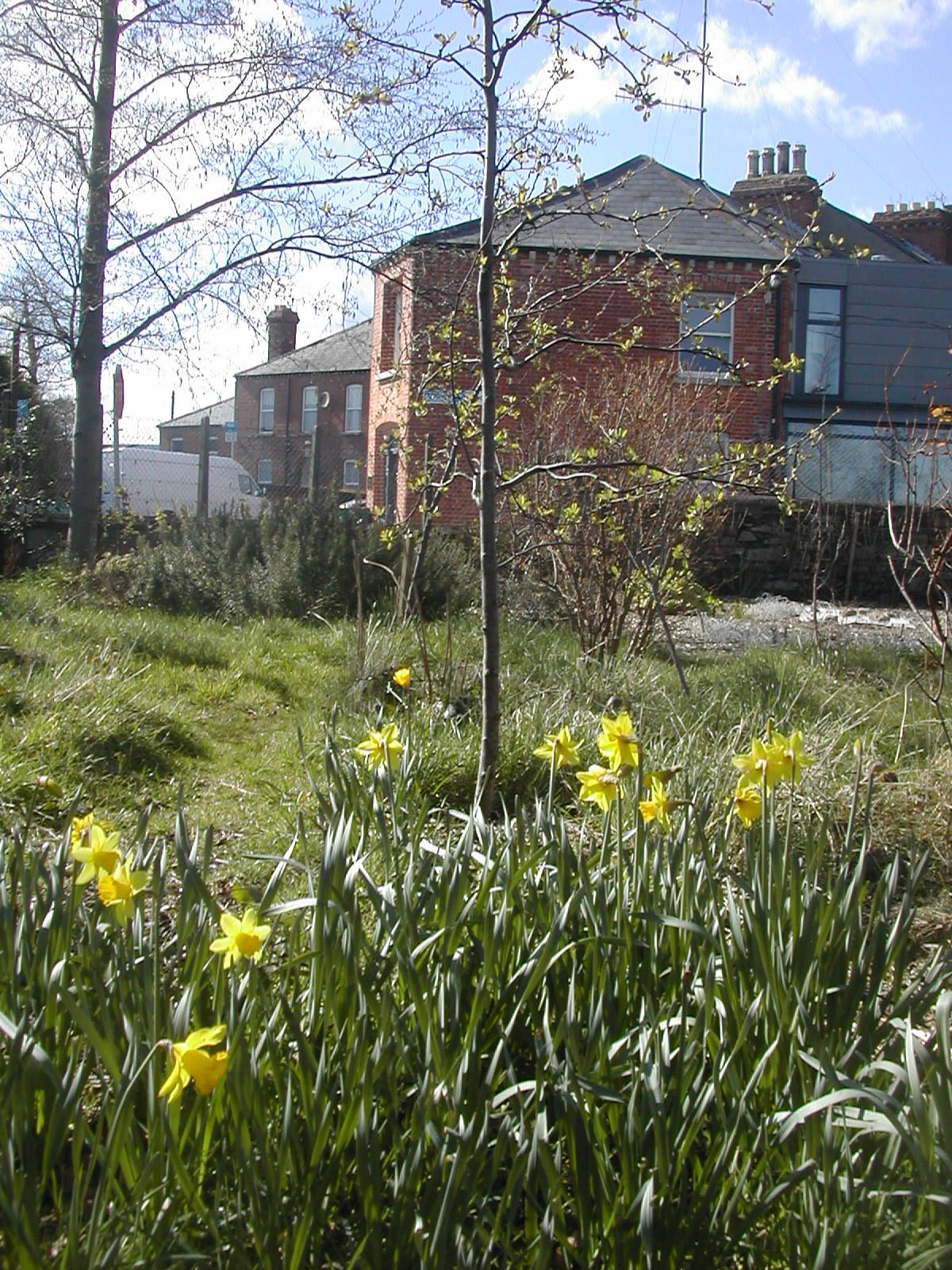
 Daffs. showing their full growth.                      

 More flowers along the entrance to the garden. 
Community Gardening  in April 2013
April is great, the soil is warming up and spring should be here. Do keep an eye on the weather forecast though, even in  Ireland we can still get cold snaps and snow is  not unknown in April. Keeping horticultural fleece on standby in case of cold weather is a good idea.
Harvest: We're in the 'Hungry Gap' between the last of the winter crops and start of the early crops but there are still a few things available, late sprouting and chards for example plus you may have some early salad crops from the greenhouse border.
General Gardening Tip: If you have any horticultural fleece, you can peg that onto the ground a week or so before you plant. The small rise in temperature of the soil can make a big difference
Sowing, Planting and Cultivating:  There's quite a list to sow and plant outside, especially if March has not been suitable.
Do remember the weeds are springing into action, so keep the hoe going. Don't forget, a sharp hoe is the best friend a gardener can have. Just slide it back and forth slightly below the surface of the soil and you'll stop the weed seedlings in their tracks. Hoeing is also good in the event of drought as the disturbed soil surface stops the water being sucked to the surface by capillary action and evaporating in dry winds.
Things to Sow:  •Beetroot  •Peas   •Broad Beans   •Broccoli   •Brussels Sprouts   •Cabbage   •Cauliflower   •Kale    •Chard   •Kohl Rabi   •Leeks   •Spinach   •Beet spinach   •Rocket   •Lettuce   •Radish
With your carrots, covering with a fleece and ensuring the edges are buried will stop the carrot root fly from gaining entry to lay eggs by your carrots. The eggs hatch in larvae that burrow into the carrot root, killing the plant or at least ruining the crop.
Plant Outdoors: Globe and Jerusalem Artichokes   Onion & Shallot Sets   Asparagus. 
March is the traditional potato planting time. If you have a comfrey bed and it has sprung back, the first cut laid in the trench under the potatoes will provide nutrition to get them off to a good start.
 On the subject of comfrey, if you make a comfrey tea it will help you to a great crop to use it on your potatoes. Many novice growers wonder why they have small crops of potatoes and most often this is just down to lack of food for this hungry crop.
 Sow in Heat (Greenhouse or Windowsill)
 •Aubergine   •Celery   •Outdoor Cucumbers   •Tomatoes (if you've not already done so)  A good tip in a windowsill is to stick some silver cooking foil onto cardboard and place on the inside to reflect light back onto the seedlings. This will help revent them being drawn.
Sow Outdoors Under Cloche:  •French beans   •Lettuce   •Sweetcorn  
Alternative Method for Sweetcorn  like to pre-chit  sweetcorn, lay the seeds on a layer of damp kitchen paper and then place a layer of paper over in an airtight box. An old ice-cream carton or a Tupperware type box is ideal. Check carefully each day and as soon as the small white sprout appears, plant the seed about half to an inch deep in a 7.5cm(3") pot of general purpose compost in the greenhouse. When the shoots appear about an 2.5cm (inch) high, plant out under cloche being careful not to disturb the root (sweetcorn hates root disturbance) under a cloche. Sweetcorn needs a lot of nitrogen and a teaspoon of dried blood per plant or water with urea (this is a chemical, I do not mean pee on them!)
Many of the crops you can sow directly will also benefit from cloching, especially as you move northwards or started off in modules in a cool greenhouse or coldframe and then planted out later.
Fruit: Strawberries can be planted out now, it's best to remove flowers in the first year as you conserve strength for growth and gain larger crops in subsequent years. An easy way to gain strawberry plants is to plant the runners into pots and when rooted cut the runner. The plants don't last forever so you need to rotate them ever three to five years.
Hand pollinate peaches and nectarines. Tickle the flowers with a small paint brush to spread the pollen. Cover if a cold spell threatens. A good layer of compost around the base of fruit trees will ensure they have the nutrition to provide another good crop for you.
Gardener's Pests: I've mentioned the carrot root fly but the gardener's worst enemy is awakening. The evil slugs and snails are coming out to eat entire rows of succulent young seedlings overnight so take action now


Monday, March 18, 2013

Dublin Community Growers and Sth.Circular road Community Garden

These photo`s are from the St.Patricks Family Fun Day held on the 16th.March 2013 in Merrion Sq.The first photo is getting the Community garden ready for the growing season.
Enjoy the start of Spring and the items below.
Willie
 
 
 Turning the sod in the Community Garden

 Our stand in the Family fun day.

 The crew getting items ready.

 Marion,Susann

 All the ingreadents for making seed bombs.

 The start of the interest.

 Starting small,never too young to learn. 

 Learning from the Master.
 
 Even adults are interested.

 The childrens drawings on display,which they did on the day.

Home composting information and booklets on  Biodiversity,Pollinators in the garden how to encourage them in.


Sunday, March 10, 2013

 
This year 2013 saw the relaunch of the Dublin Community Growers Harvest Festival which will be held in Wolfe Tone Sq. in Dublin city.This event brings all of the community gardens and some allotments together to show case how community can grow good whole some food for their local areas and bring community back into their areas using some unwanted or derelict sites for the benefit of their communities.  
Below are some of the photo`s taken at the launch in the Masion House in Dublin City on March 7th.Some of the food was donated from the community gardens and allotments to be served on the night,which I must say was very well prepared by our Master Chef Mary on the night.At the launch was the Dublin City Lord Mayor who opened the launch.Our sponsors and guests and special appearance of Mr.Duncan.Steward from Eco-eye.
 
Enjoy the photo`s
Willie
South Circular Road Community Garden
 
 Marian and Lord Mayor

 Chairperson Peadar Lynch

 Presentation to sponsors 

  Presentation to sponsors

 D.Steward from Eco-Eye

Members and Guests

Members and Guest`s

Members and  Guest`s

 Members and Guest`s

 Members and Guest`s

 Myself and Guest`s
 
Have a Good Day one and all.


Saturday, February 23, 2013

Hi all,
         AHH March in  the garden,Cold & Wet.What to do in the garden at this time of the year,well there is alway work to do.
Come March in the Community Garden

Harvest  Any leeks left standing should come up now – you can freeze them for use in soups and stews. Parsnips too should come up in early March before they try and re-grow. You may have spinach beet and chards available, the last of the late Brussels sprouts, winter cauliflowers, kale, swedes, salsify and scorzonera. Don't forget to keep checking the purple sprouting!
General Jobs in the Plot  Have a good tidy up and finish those odd construction jobs because you are going to be busier still later in the year. If you have any horticultural fleece, you can peg that onto the ground a week or so before you plant. The small rise in temperature of the soil can make a big difference
Sowing, Planting and Cultivating  If the weather permits you can plant your onion and shallot sets. March is usually the right time to establish an asparagus bed if you are starting from crowns.  Mid-March should let you start planting those early potatoes you've had chitting and talking of root crops, you can plant Jerusalem artichoke tubers now.
Vegetables to Sow Ø  Beetroot    Ø  Broad Beans  Ø  Early peas (but they may do best started in a gutter in the greenhouse then slipped into a trench)  Ø  Brussels sprouts – early varieties like Peer Gynt will be ready in September Ø  Kohlrabi  Ø  Leeks   Ø  Lettuce    Ø  Radish     Ø  Parsnips     Ø  Spinach Beet   Ø  Early turnips
Sow in Heat Your windowsill or a propagator in the greenhouse will come into use now to start off your tomatoes, peppers, aubergines and cucumbers.
Under Cloche  Summer cabbages and early cauliflowers, early carrots will get away best under a cloche. If you set your cloche up a week or two beforehand, it will warm up the soil so you will get even better results.Many of the crops you can sow directly will also benefit from cloching, especially if you grow in the north of the country, or start off seeds in modules in a cool greenhouse or coldframe and then plant out later.
Fruit :Planting and Pruning There is still time to finish planting bare root fruit trees and bushes, especially raspberries and other cane fruits. Early this month you can still prune apple and pear trees while they are still dormant. It's also time to prune gooseberries and currants. With currants shorten the side shoots to just one bud and remove old stems from the centre of the bushes.
They'll benefit from some compost spread around the base as well.
 
Scutch Grass in the Community Garden/Couch Grass
Botanical name; Elymus repens
Scutch grass is one of the most common garden weeds. It is a persistent perennial grass that spreads quickly by means of underground stolon’s or stems. From buds spread along these stems, new shoots push up to the surface, spread their leaves and begin to grow. The underground shoot is sharply pointed and can exert enough force to drive through a potato tuber.
If left uncheck, an area of scutch grass expands and at the same time, becomes more dense within a clump. The roots emits a chemical that reduces growth by other plants and makes scotch grass formidable competitor for shrubs, trees, perennial flowers, fruit trees and roses. Scutch is generally found in any garden soil that is not very wet, it thrives in poor soil but is most vigorous in good fertile soil.
Control of isolated plants, is quite easy by easing out the entire root system with a digging fork. Any piece left behind soon roots again. Continuous hoeing of the green tops gives control but persistence is essential.
On bigger areas, the best approach is to cover the ground with black plastic or carpet to exclude all light, there must be no clinks of light. Depending on the level of infection and the time of year, this can take several months to clear. 
 
Saturday, 23 February 2013         Making home-made Bird fat blocks
 Here is all you need to make bird fat blocks:
A much needed foodstuff for foraging birds at this time of the year.
Lard (500g)
Mixed seed, Sunflower seed & Peanuts (600g),Add Mealworms if you want.

Various yoghurt, pasta sauce, cream pots etc. String or Twine.
Some twigs.Large sauce pan (preferably an old one).
Large mixing bowl
.
Make a small hole in the base of each pot, cut twigs into lengths slightly wider than pot, diagonal measurement is ideal. Tie twig to end of string/twine and thread through hole.    
Melt Lard over heat in old sauce pan, once in  liquid form, leave to cool a little. Whilst waiting it's an ideal time to prepare the pots. When Lard is cooler but still liquid, poor into seed mix in mixing bowl, stir occasionally until the mixture starts to stiffen, takes about 20-30mins. It's best not to fill pots when lard is still liquid as it will leak out of hole in pot base.
  A good tip is to put your finger over the hole whilst you fill the pots up with the seed & lard mixture, then the liquid can’t leak out as you fill. I have also refilled some square containers that contained bird cake that fit in those wire feeders. Leave for a few hours (preferably overnight) in a cool place, then carefully press them out. If your mixture is firm enough they should slide out easily, if not sliding a knife around sides will help to release it.                             
Hang up anywhere suitable, a tree branch is ideal, but I have used old shelf brackets on an archway & on the corners of my fruit cage. No sooner are they in place and the birds home in on them, a Robin had a nibble of this one but flew off before I could take a pic.
The twigs act as a stopper so the seed ball cannot slide of the string/twine and makes a handy perch for small birds.
Have a good day.
Willie


Sunday, February 17, 2013


Hi all,
Spring in the Community Garden 2013,please see some of our photo`s.We have frog spraw in our pond,first daff. flower in the garden.Some plants showing growth.Enjoy them.


View from above


Primulas
Some more flowers
First daff. of 2013 in the garden
Signs of growth
Rhubarb stools in growth     


Pond


Frog spawn


What to be doing in the Community Garden now 


Harvest

Any leeks left standing should come up now – you can freeze them for use in soups and stews.

Parsnips too should come up in early March before they try and re-grow. You may have spinach beet and chards available, the last of the late Brussels sprouts, winter cauliflowers, kale, swedes, salsify and scorzonera. Don't forget to keep checking the purple sprouting!

General Jobs in the Plot

Have a good tidy up and finish those odd construction jobs because you are going to be busier still later in the year. If you have any horticultural fleece, you can peg that onto the ground a week or so before you plant. The small rise in temperature of the soil can make a big difference

Sowing, Planting and Cultivating
If the weather permits you can plant your onion and shallot sets. March is usually the right time to establish an asparagus bed if you are starting from crowns.  Mid-March should let you start planting those early potatoes you've had chitting and talking of root crops, you can plant Jerusalem artichoke tubers now.

Vegetables to Sow

  Beetroot, Broad Beans,  Early peas (but they may do best started in a gutter in the greenhouse then slipped into a trench)   Brussels sprouts – early varieties like Peer Gynt will be ready in September, Kohlrabi,  Leeks, Lettuce, Radish, Parsnips, Spinach Beet,  Early turnips.
Sow in Heat
Your windowsill or a propagator in the greenhouse will come into use now to start off your tomatoes, peppers, aubergines and cucumbers.

Under Cloche
Summer cabbages and early cauliflowers, early carrots will get away best under a cloche. If you set your cloche up a week or two beforehand, it will warm up the soil so you will get even better results.Many of the crops you can sow directly will also benefit from cloching, especially if you grow in the north of the country, or start off seeds in modules in a cool greenhouse or coldframe and then plant out later.

Fruit

Planting and Pruning
There is still time to finish planting bare root fruit trees and bushes, especially raspberries and other cane fruits. Early this month you can still prune apple and pear trees while they are still dormant. It's also time to prune gooseberries and currants. With currants shorten the side shoots to just one bud and remove old stems from the centre of the bushes. They'll benefit from some compost spread around the base as well.
 
Willie


Tuesday, February 5, 2013

Compost Boot Camp

Sitric Garden Compost Bootcamp

South Circular Road Community Food Garden Project

The South Circular Road Community Food Garden Project started in April 2007. We have a derelict site on loan from ST Salvage Company that we have converted into a community food garden. This is a continuation of the initial successful Dolphins Barn Community squatted food garden that was on the canal from 2005 -2007.